Creating your first MQTT request
In this example of an MQTT request, you will connect to a public broker, subscribe to topics, publish messages, and visualize the response.
Create an MQTT request
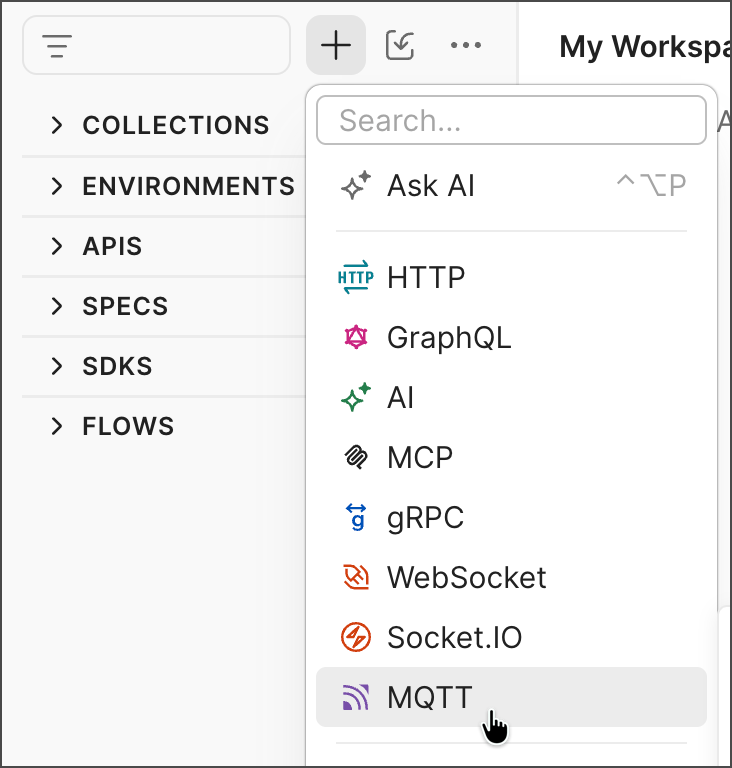
In a Postman workspace, click  and select
  MQTT.
MQTT.
Connect to a broker with Postman
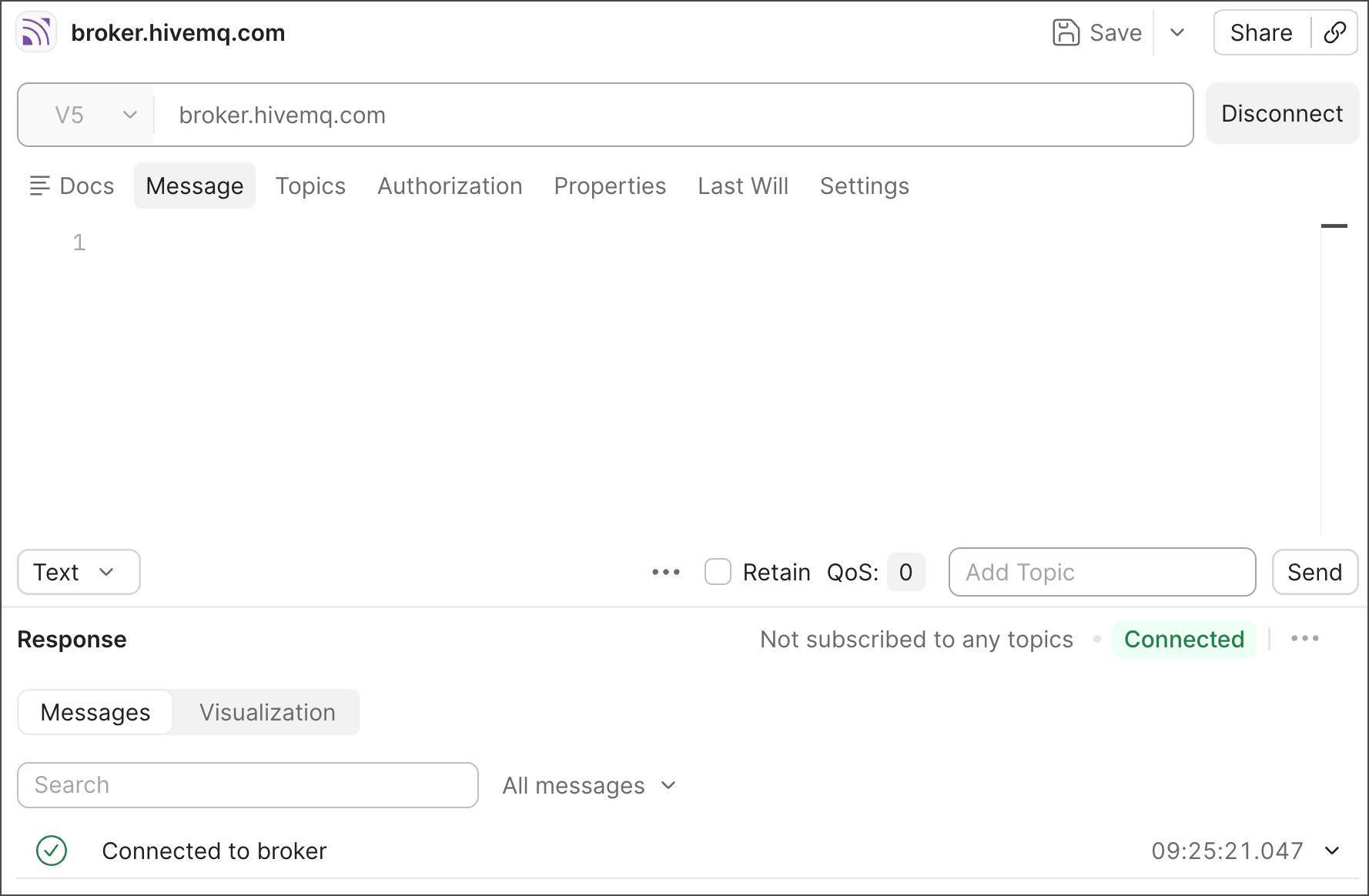
To connect to an MQTT service, you need a broker URL. This example uses the broker.hivemq.com public broker. You can also use any other public broker or a broker hosted on your local machine.
- Enter
broker.hivemq.comas the request URL. - Click Connect to connect to the broker.
A message in the response area indicates that you’re connected to the broker.
If you’re using the Postman web app, use the Postman Desktop Agent to connect to an MQTT broker. See About the Postman Agent for more information.
Subscribe to topics
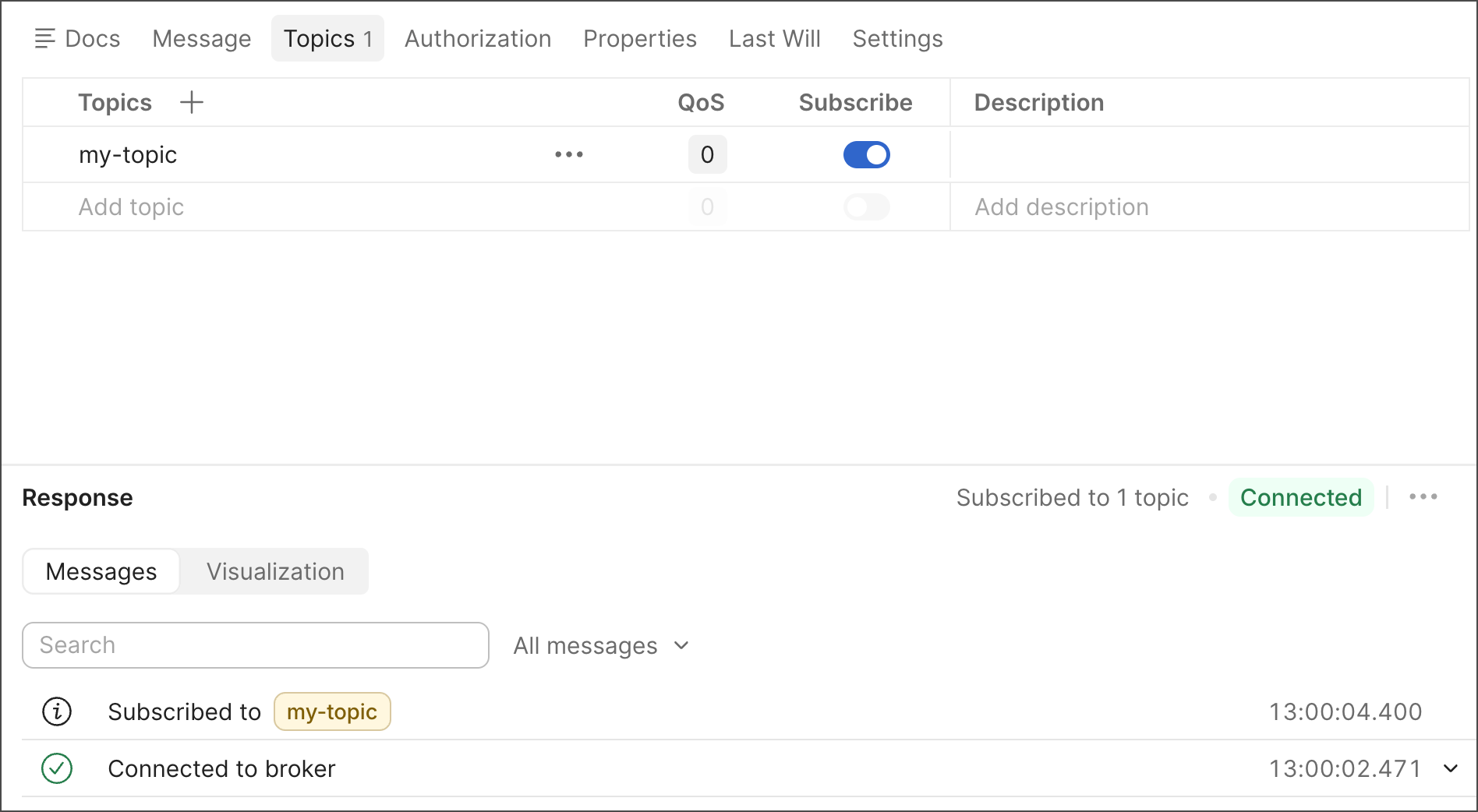
While connected to the broker, click the Topics tab. This enables you to create, document, and subscribe to multiple topics.
- In the Topics column, enter
my-topicas the topic name. - Turn on the Subscribe toggle.
A message appears in the response area indicating that you’re subscribed to the topic.
Publish messages
You can use the Message tab to compose and send messages to the broker.
- Click the Message tab and enter
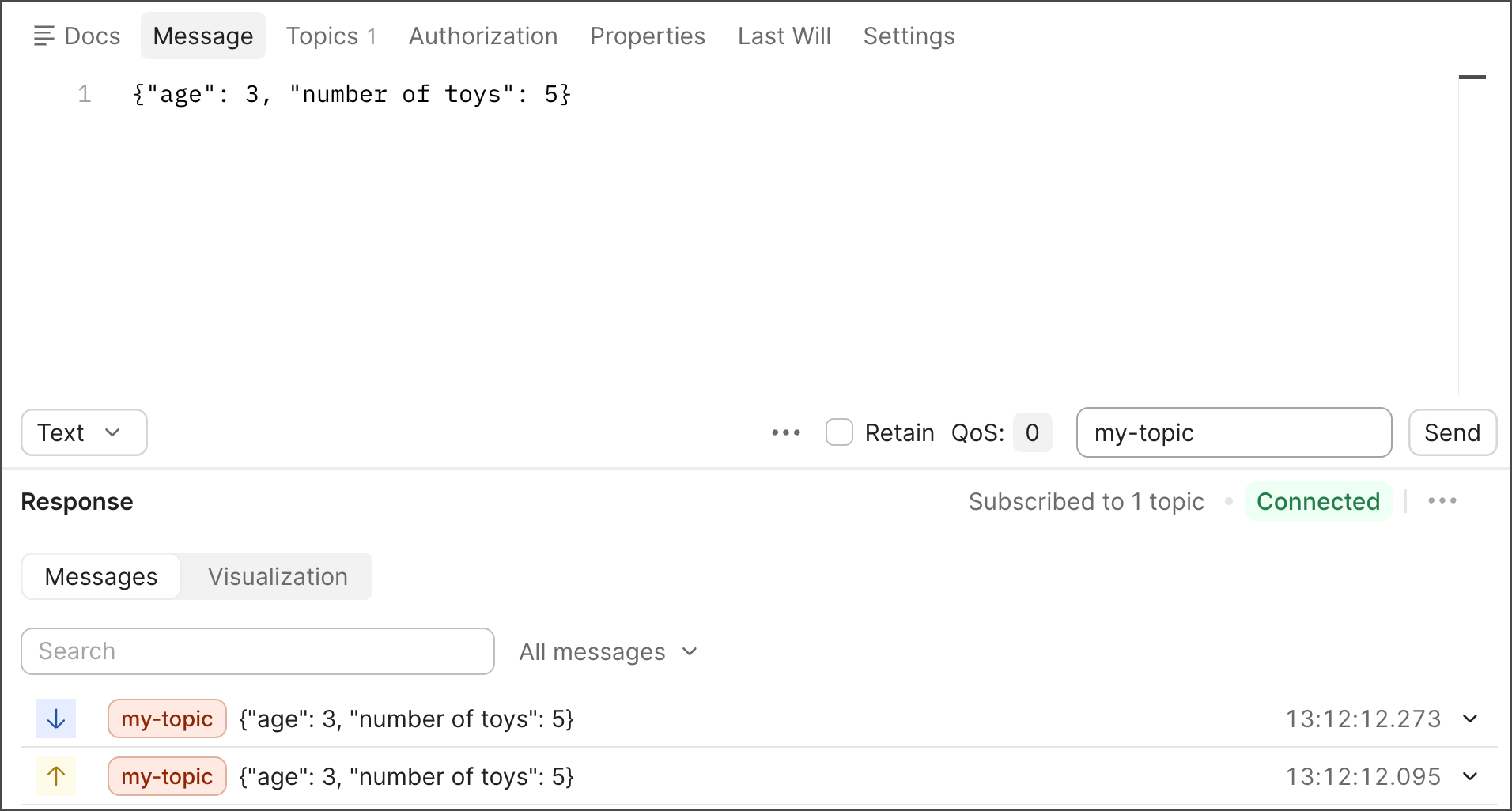
{"age": 3, "number of toys": 5}as the message. - Enter
my-topicas the topic name. - Click Send to publish the message.
An outgoing message appears in the response area indicating that the message was published. Because you’ve already subscribed to the my-topic topic, you’ll also view an incoming message with the same body. Go ahead and send a few more messages counting the number of toys you had growing up.
Visualize the response
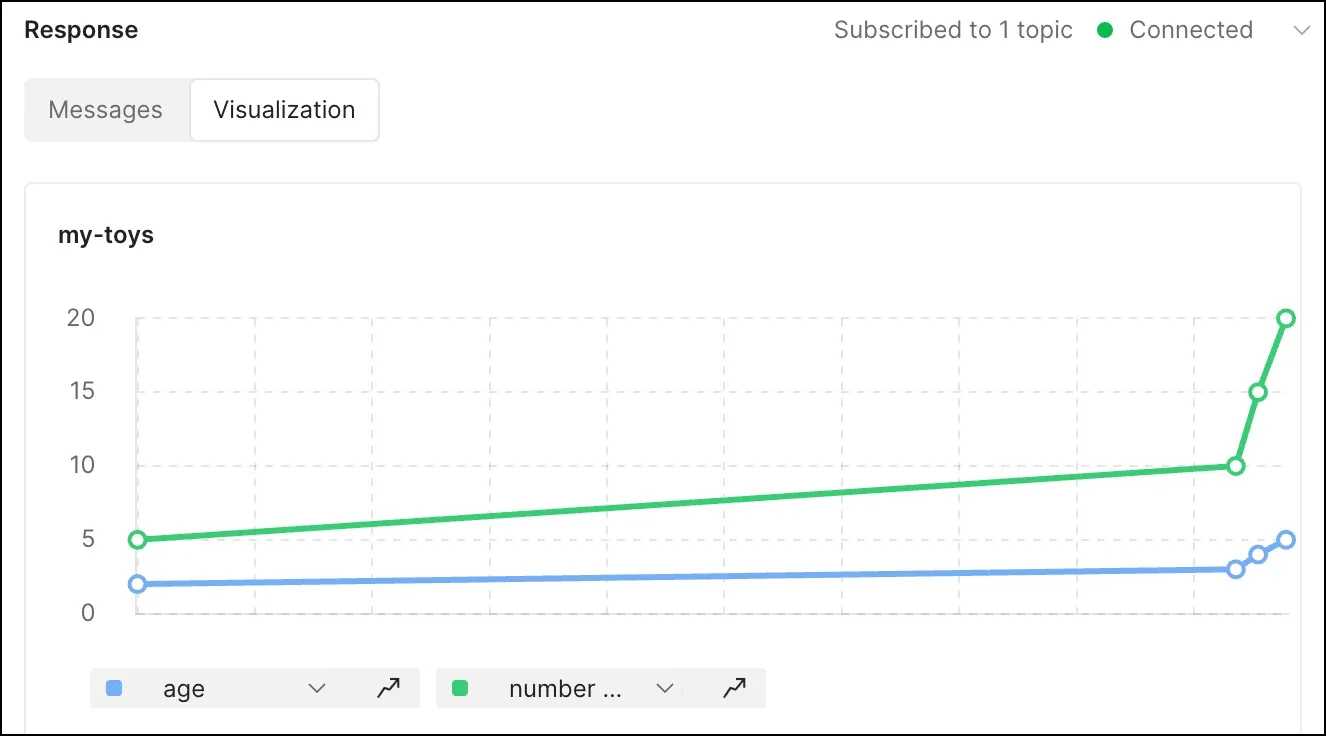
Now that you’ve subscribed to a topic and published a few messages, you can use the Postman Visualizer to view the messages in a more comprehensible format.
- Switch to the Visualization tab in the response area. You’ll notice the messages for the
agefield visualized as a line chart. - Click the field name dropdown list to select the field you want to visualize.
- Click Add to add more fields to the chart and view the changes in the values.
- Click
 Change Visualization Type to change the chart type.
The visualization changes in real time as you receive newer messages for the same topic.
Next step
Try subscribing to multiple topics at once and publishing messages to them.